
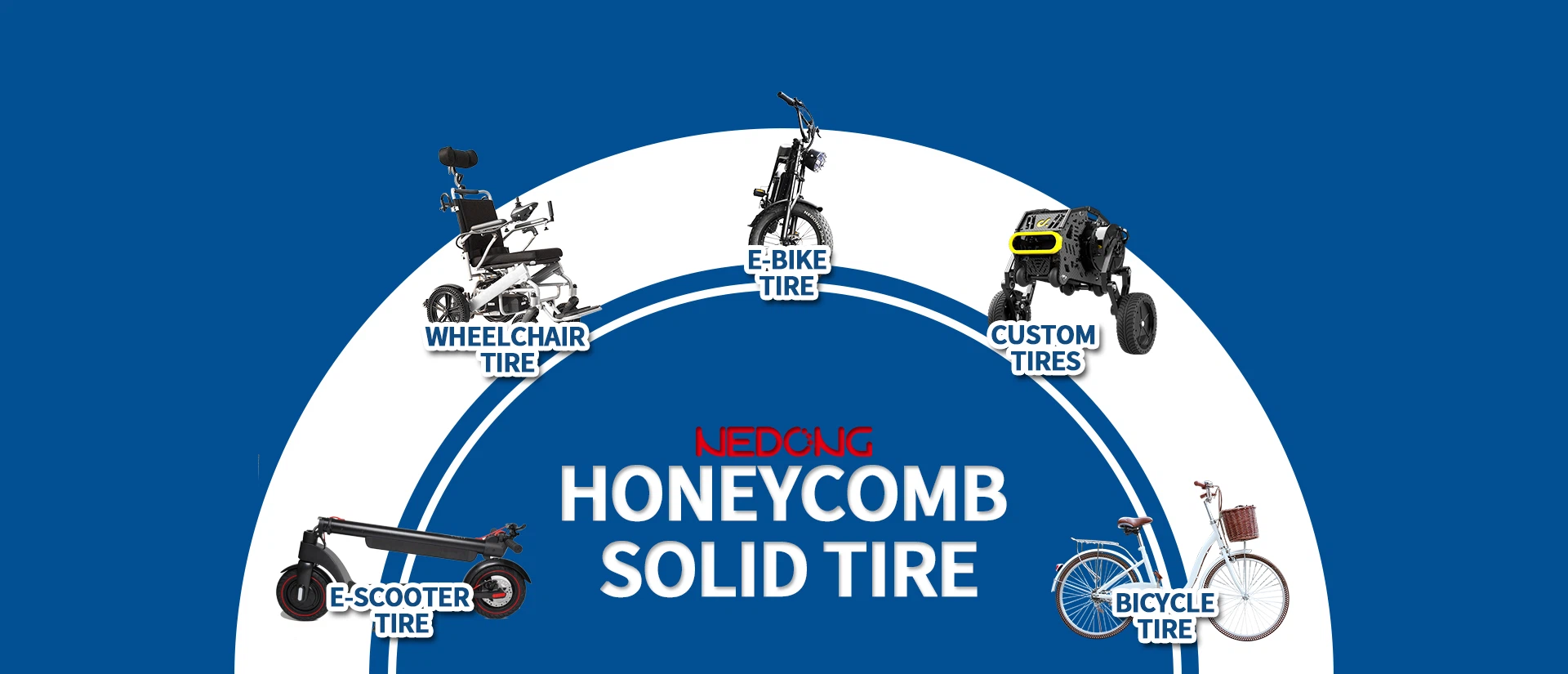
The so-called solid tire is a solid carcass. No cord is used as the skeleton, so there is no need to inflate the tire, and there is no need to fill the inner tube or inner liner. The first tires were actually solid tires.
Solid tires are mainly divided into two types: bonded tires and non-bonded tires. The former refers to the tires that are directly vulcanized and attached to the rim, and the latter refers to the tires that are vulcanized and then fixed on the rim.
According to the classification of the shape, there are two types of solid tires with inclined bottom and solid cylindrical tires; if divided by purpose, there are oil-resistant, high-load solid tires, environmentally friendly non-marking solid tires, antistatic, conductive, etc.
Solid tire performance: solid tires have good heat dissipation, high elasticity and wear resistance, better stability, larger ground contact area, and stronger grip.
Solid tire functions: solid tires have long service life, low deformation rate, less impact on forklifts, reduced forklift maintenance costs, and increased driver comfort.