
The suitability of replacing Electric Bicycle Tire with Solid Tire should be evaluated from multiple perspectives.
The advantage of Solid Tire lies in its puncture resistance. It demonstrates superior performance on roads with sharp stones or protruding obstacles. Moreover, this type of Electric Bicycle Tire requires no inflation and eliminates the risk of blowouts.
However, its limitations are equally evident. The substantial weight of Solid Tire increases energy consumption, reducing the vehicle's range and speed. Its rigid structure creates strong vibrations during rides, particularly uncomfortable on uneven roads and long-distance journeys. This Electric Bicycle Tire variant also demands higher specifications for shock absorbers.
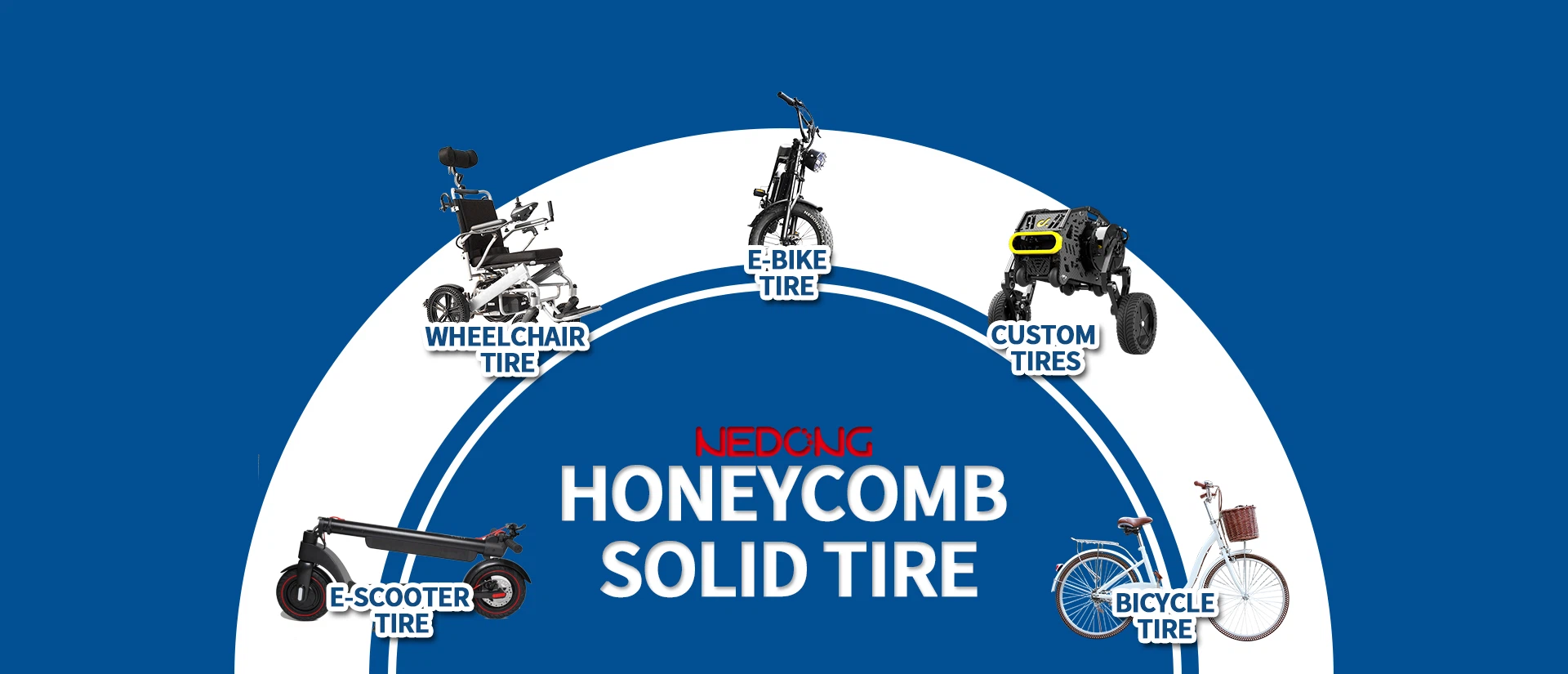
For riders who find these drawbacks unacceptable, Nedong LC rubber Tire presents an innovative solution. As a new-generation airless Electric Bicycle Tire, Nedong LC rubber Tire integrates advantages of previous designs while optimizing structural weaknesses. Its upgraded hollow honeycomb structure significantly reduces weight while enhancing compression ratio and elasticity, improving shock absorption capabilities.
Utilizing LCRB polymer material, this Solid Tire alternative achieves lighter weight alongside improved wear resistance, weather resistance, and aging resistance. Compared with conventional Solid Tire, Nedong LC rubber Tire offers better cushioning performance while maintaining durability, making it an optimal choice for modern Electric Bicycle Tire applications.
Electric Bicycle Tires Suitable for Solid Tires?
Feb 24, 2025
Send Inquiry